Kitchen Cleaning Schedules: Daily, Weekly, and Monthly
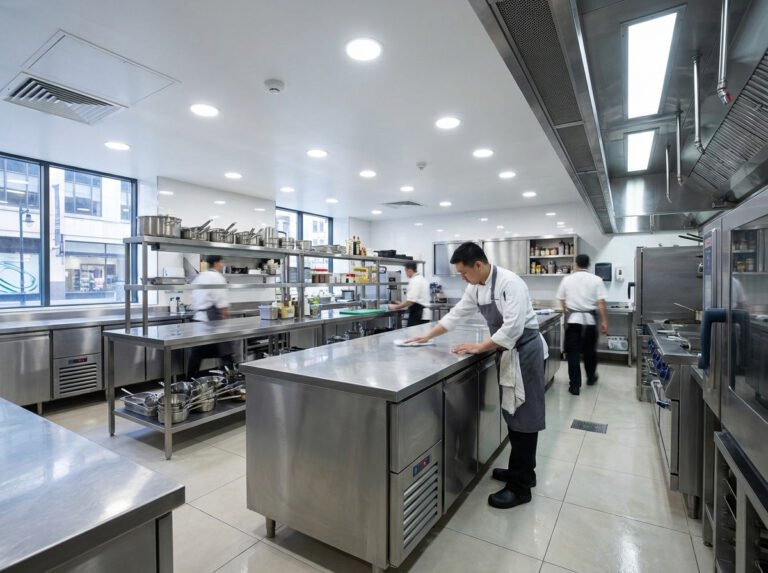
Why They Matter and How to Create an Effective System Maintaining cleanliness in a commercial kitchen is not just about passing health inspections—it is a critical part of food safety, operational efficiency, and brand reputation. A structured kitchen cleaning schedule ensures that every area is cleaned at the right time, by the right person, using the right method.
This article explains the importance of kitchen cleaning schedules and provides guidance on how to create effective daily, weekly, and monthly cleaning routines that work in real restaurant environments.
Why Kitchen Cleaning Schedules Are Important
A commercial kitchen operates under constant pressure. Without a proper system, cleaning tasks are often rushed, forgotten, or inconsistently done. A well-planned cleaning schedule offers several key benefits:
1. Ensures Food Safety Scheduled cleaning prevents cross-contamination, bacterial growth, and foodborne illnesses. Regular sanitation of food-contact surfaces reduces the risk of serious health violations.
2. Improves Staff AccountabilityWhen tasks are clearly assigned, staff know exactly what needs to be cleaned and when. This reduces confusion, excuses, and missed responsibilities.
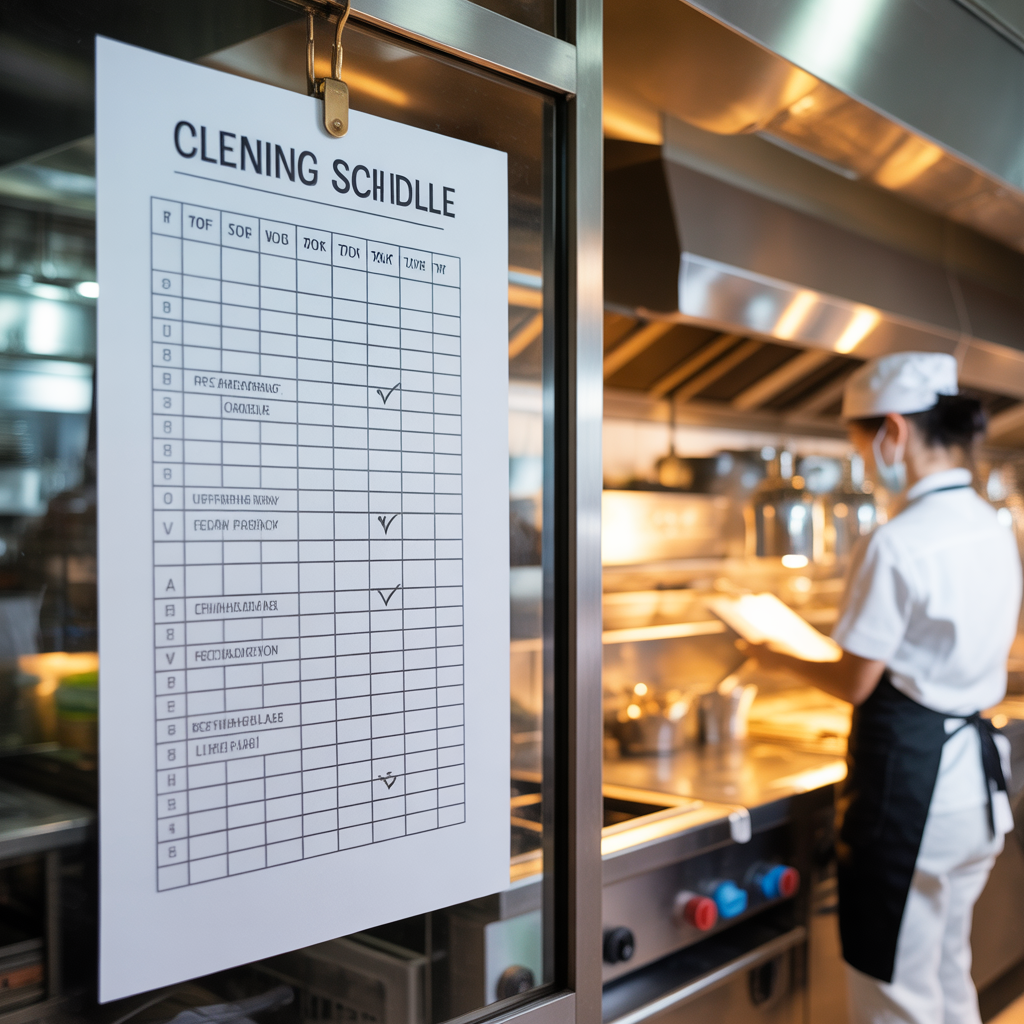
3. Supports Health Inspection Compliance Health inspectors expect to see documented cleaning systems. A visible cleaning schedule shows that hygiene is managed systematically, not casually.
4. Extends Equipment Life Grease buildup and improper cleaning shorten the life of kitchen equipment. Regular maintenance cleaning helps avoid costly repairs and replacements.
5. Creates a Professional Work Environment A clean kitchen boosts staff morale, efficiency, and pride in their workplace, which directly impacts service quality.
Daily Kitchen Cleaning Schedule
Daily cleaning focuses on high-risk and high-use areas that directly impact food safety. These tasks prevent immediate contamination and maintain hygiene throughout service.
Daily cleaning should be non-negotiable and completed at the end of every shift.
Key Areas Covered in Daily Cleaning 1. Food preparation tables and cutting boards 2. Cooking equipment surfaces (stoves, grills, fryers – exterior) 3. Knives, utensils, and small equipment 4. Floors, especially wet and greasy areas 5. Garbage bins and waste disposal areas 6. Handwash sinks and service sinks
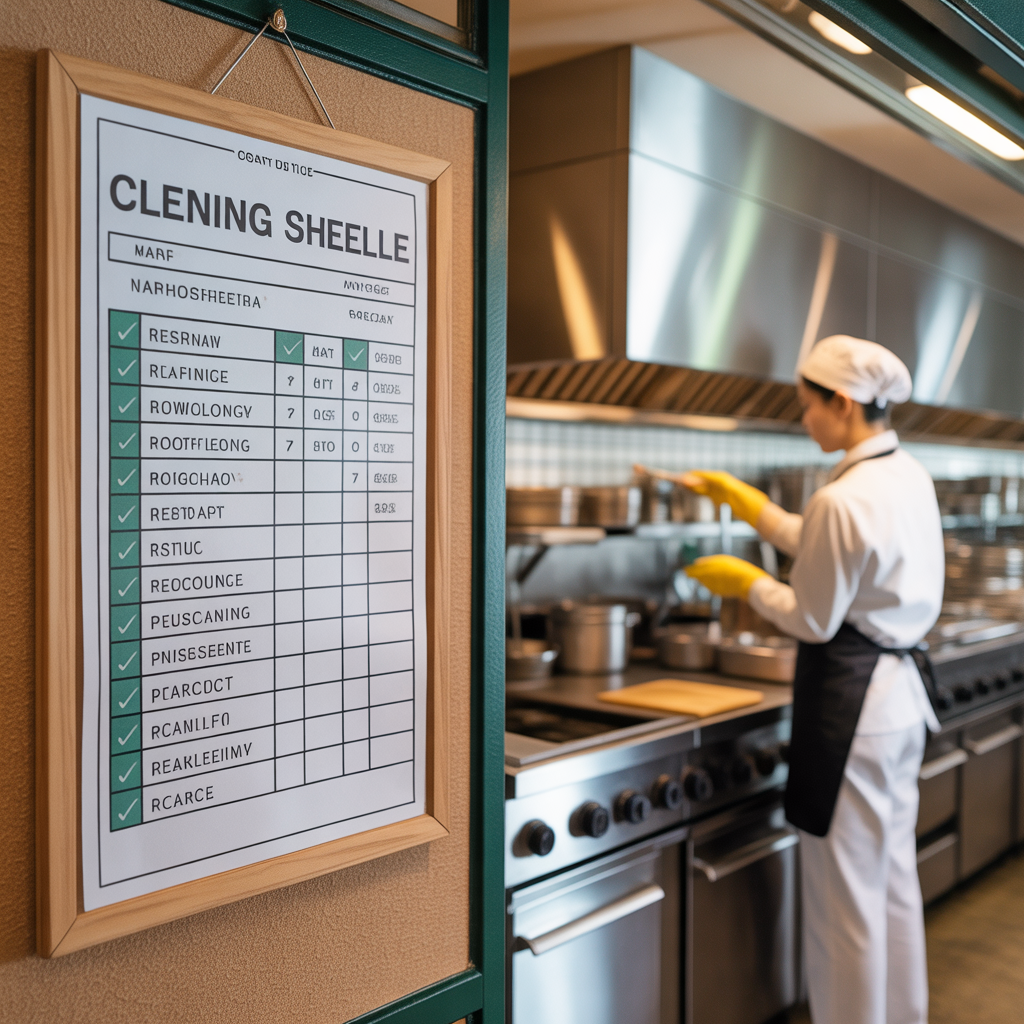
Best Practices for Daily Cleaning 1. Clean as you go during service 2. Sanitize food-contact surfaces after every use 3. Assign end-of-shift cleaning checklists 4. Use sign-off sheets for accountability
Weekly Kitchen Cleaning Schedule
Weekly cleaning targets areas that don’t require daily attention but still accumulate dirt, grease, and bacteria over time.
Weekly cleaning prevents gradual buildup that often leads to inspection failures.
Key Areas Covered in Weekly Cleaning 1. Refrigerators and freezers (shelves, gaskets, doors) 2. Dry storage shelves and containers 3. Exhaust hoods and grease filters 4. Walls, tiles, and splashbacks 5. Drains and floor traps 6. Ice machines (external cleaning)
Best Practices for Weekly Cleaning 1. Schedule during slow business hours 2. Rotate responsibilities among staff 3. Use proper degreasers and descalers 4. Document completion with date and signature
Monthly Kitchen Cleaning Schedule
Monthly cleaning is deep, preventive maintenance cleaning. These tasks are essential for long-term hygiene and equipment performance.
Monthly cleaning protects your kitchen from long-term risks that daily or weekly cleaning cannot address.
Key Areas Covered in Monthly Cleaning 1. Deep cleaning of ovens, fryers, and grills 2. Grease traps and exhaust duct inspections 3. Behind and under heavy equipment 4. Ceiling vents, lights, and fans 5. Cold room deep sanitation Pest control checks and monitoring
Best Practices for Monthly Cleaning 1. Schedule during slow business hours 2. Rotate responsibilities among staff 3. Use proper degreasers and descalers 4. Document completion with date and signature
How to Create an Effective Kitchen Cleaning Schedule
1. Break Tasks by Frequency
Clearly separate tasks into daily, weekly, and monthly categories. This prevents overload and ensures consistency.
2. Assign Responsibility
Each task should have: A specific role (not “anyone”) A checklist A sign-off or verification method
3. Use Simple, Visible Formats Post cleaning schedules in: a. Staff areas b. Dishwashing sections c. Manager offices Simple tables work better than long instructions.
4. Train Staff on Procedures A schedule only works if staff know: a. What chemicals to use b. Proper dilution ratios c. Correct cleaning methods Training should be part of onboarding.
5. Review and Update Regularly Menus change, equipment changes, and staff change. Review your cleaning schedule every 3–6 months to keep it relevant.
Conclusion A clean kitchen does not happen by chance—it happens by design. Daily, weekly, and monthly cleaning schedules create structure, accountability, and consistency in even the busiest kitchens.
By implementing a well-planned cleaning schedule based on food safety satandards, restaurant owners can improve food safety, reduce operational risks, and maintain a professional kitchen environment that meets both customer expectations and regulatory standards.





Pingback: Form & Formats used in restaurant business
Pingback: Tips to Maintain Cleanliness in a Restaurant Kitchen
Pingback: Why Restaurants Fail Food Safety Inspections (And How to Prevent It)