
10 Restaurant Costs Owners Often Forget to Track
The hidden expenses that can quietly eat into a restaurant’s profit
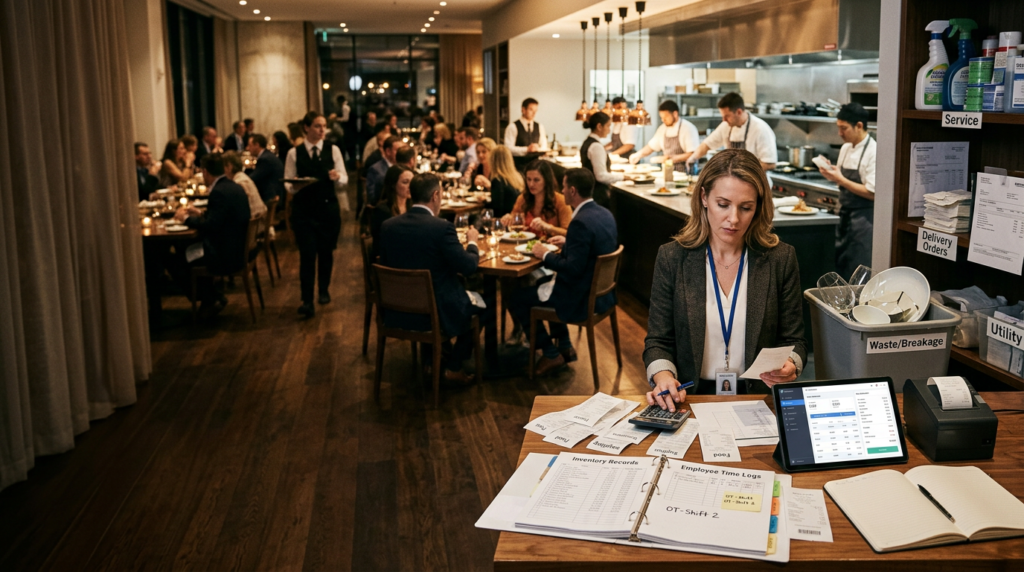
Sometimes, we see our favourite restaurant packed with customers every day, only to find out one day that it has suddenly closed. We wonder, “What happened? How could a restaurant that always looked so busy go out of business?” The answer is often hidden behind the scenes—being busy doesn’t always mean being profitable.
Restaurant owners usually keep a close eye on major expenses such as food purchases, rent and employee wages. But there are many smaller costs that can quietly eat into profit when they are not tracked properly.
A few dollars here and a few hundred dollars there may not seem significant. Over a month or a year, however, these overlooked expenses can add up to thousands of dollars
Here are 10 restaurant costs that owners and managers should regularly track.
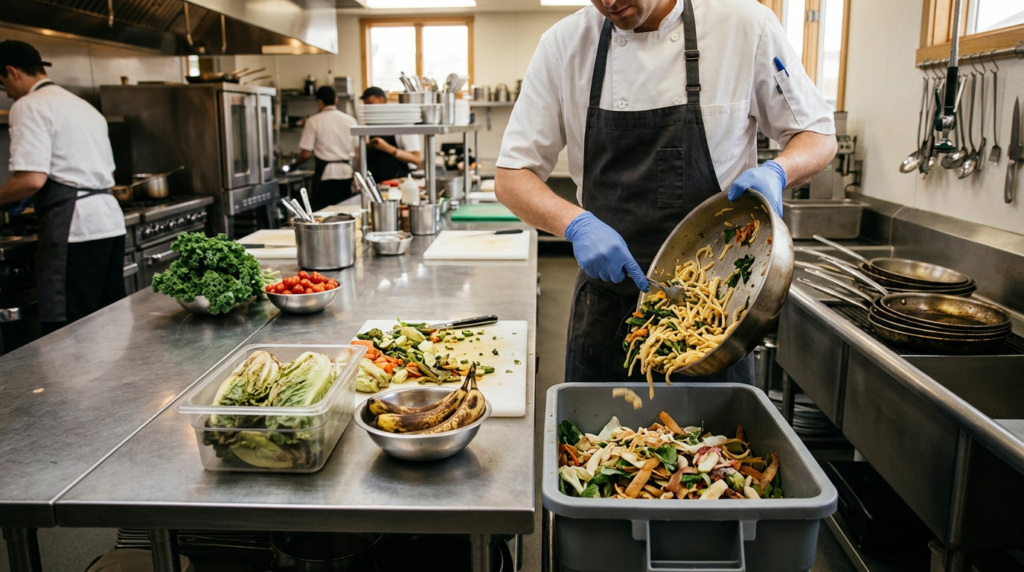
1. Food Waste and Spoilage
Food waste is one of the easiest restaurant expenses to overlook.
Ingredients can be wasted for several reasons :
a. Overproduction b. Spoilage
c. Expired products d. Incorrect preparation
e. Poor storage f. Excessive trimming
g. Burnt or overcooked food h. Customer returns
i. Incorrect orders j. Poor portion control
Imagine $20/- worth food wasted a day which doesn’t sound like a big number, but:
$20 x 30 Days= $600/- per month
$600 X 12 months =$7200/- per year
And we know most of the restaurants waste considerably more than $20 per day.
How to control it ?
Create a simple waste log and record:
1. Date 2. Item Wasted
3. Quantity 4. Reason
5. Estimated Cost 6. Employee/Department responsible for
The goal is not to blame individual but to identify the pattern.
If you discover that the same ingredient is being thrown away repeatedly, you can investigate the reason and correct the problem.
This is where you need do some Menu engineering
2. Complimentary Food and Drinks
A manager might offer a free appetizer to resolve a complaint. An owner may provide free meals to friends. Staff meals may be provided during shifts.
None of these things are necessarily bad.
The problem occurs when they are not recorded properly
If your restaurant gives away food for free, it still has a cost.
For example, a restaurant may sell a dish for $25, but the actual ingredient cost might be $8. And if that dish is given away free, the restaurant has effectively absorbed that $8 cost without generating revenue.
Understanding your food costs is one of the first steps toward controlling restaurant expenses. Use my Food Cost Calculator to quickly calculate the food cost percentage of your menu items.

What should you track?
Consider recording:- Staff Meal
- Owners Meal
- Complimentary meals
- Customer recovery items
- Free beverages
- Discounts
- Replacements
This gives management a much clearer picture of how much product is leaving the kitchen without generating normal sales revenue.
3. Credit Card and Payment Processing Fees
Payment processing fees are easy to ignore because they are often automatically deducted.
But over a year, they can represent a significant expense.
Restaurants may pay fees associated with:
- Credit card transactions
- Debit transactions
- Online payments
- POS payment processing
- Online ordering systems
- Payment gateways
For a restaurant processing hundreds of thousands of dollars in annual sales, even a relatively small percentage can become a substantial expense.
Why it matters
Don’t look only at your gross sales.
Look at:
Gross Sales → Processing Fees → Net Amount Received
Tracking these fees separately helps you understand the actual cost of accepting different payment methods.
4. Delivery and Third-Party Commission Fees
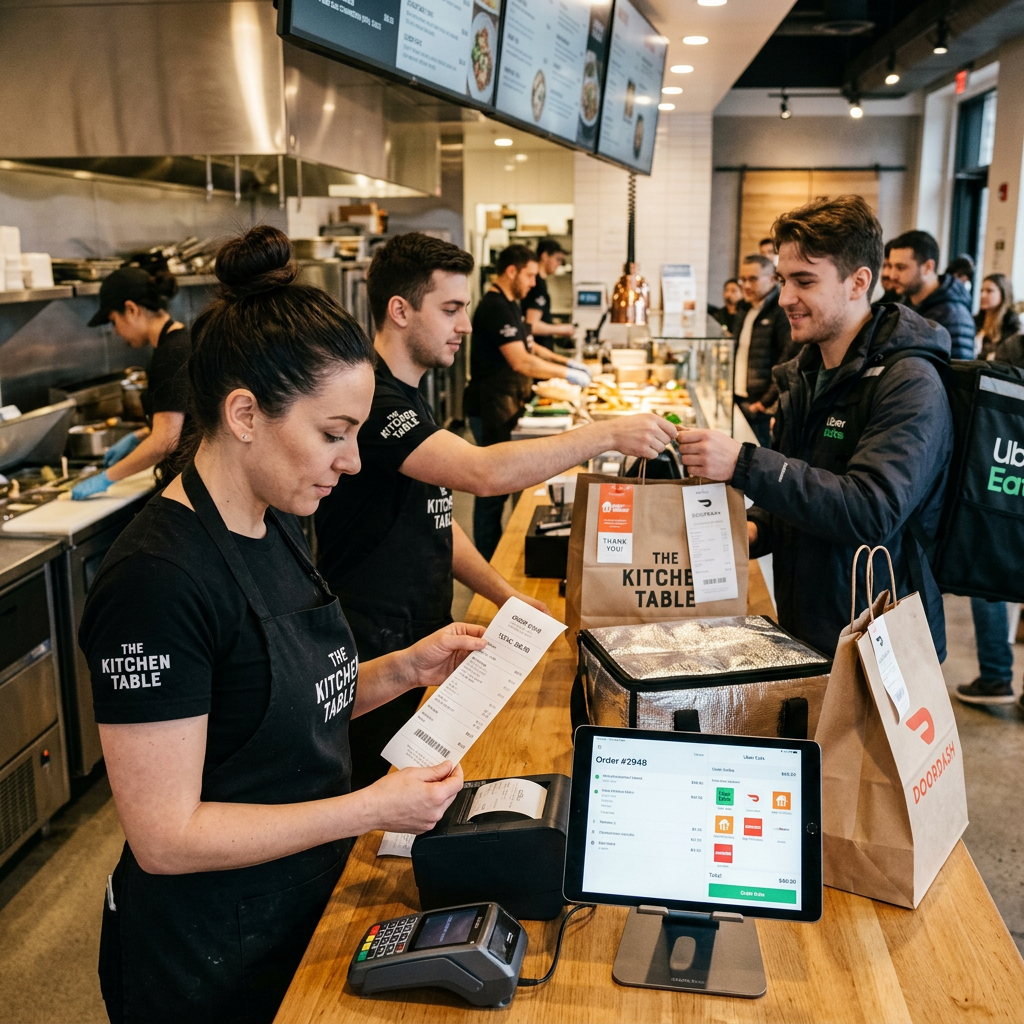
Online ordering has become an important source of restaurant revenue, but third-party delivery platforms can also significantly affect margins.
Depending on the arrangement, restaurants may have costs related to:
- Delivery commissions
- Marketplace commissions
- Promotional fees
- Advertising
- Delivery adjustments
- Other platform charges
But the actual amount retained by the restaurant may be significantly lower.
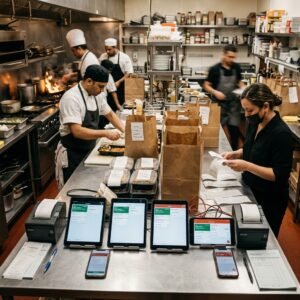
Track delivery sales separately
Your monthly report should ideally distinguish between:
Dine-in sales
Takeout sales
Direct online orders
Third-party delivery sales
Then compare the revenue generated with the associated fees.
This allows you to determine which sales channels are actually contributing to profitability.
5. Discounts, Promotions and Coupons
Discounts are designed to attract customers, increase traffic and generate sales.
But discounts can also quietly reduce your profit margin.
Consider a $100 bill with a 20% discount. The customer only pays $80/-
But your food and labour costs may not have fallen by 20%.
This means the discount comes directly out of the revenue that would otherwise contribute toward covering your operating expenses and profit.
Track discounts separately
Your POS system should ideally allow you to monitor:
- Employee discounts
- Promotional discounts
- Coupons
- Loyalty rewards
- Manager discounts
- Customer recovery discounts
At the end of the month, calculate the total value of discounts given.
You may be surprised by the number.
6. Hidden Labour Costs
Labour is usually one of the largest restaurant expenses, but the full cost of labour isn’t always obvious.
Managers often focus on regular scheduled hours while overlooking additional paid time such as:
- Opening preparation
- Closing duties
- Staff meetings
- Training
- Cleaning
- Preparation before opening
- Closing after the restaurant stops serving customers
- Overtime
- Inefficient scheduling
For example, if several employees regularly stay 20–30 minutes after closing, those minutes can become a significant annual labour expense.
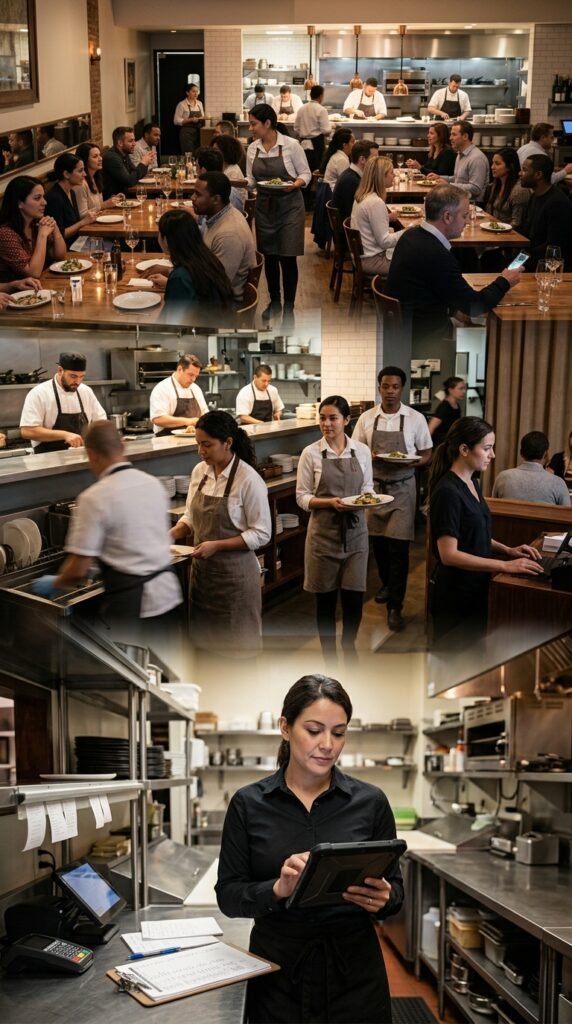
Track labour against sales
One useful measurement is:
Labour Cost % = Total Labour Cost ÷ Total Sales × 100
Tracking this regularly can help identify periods when staffing levels are too high or scheduling needs adjustment.
The goal isn’t simply to reduce staff.
The goal is to have the right number of employees working at the right time.
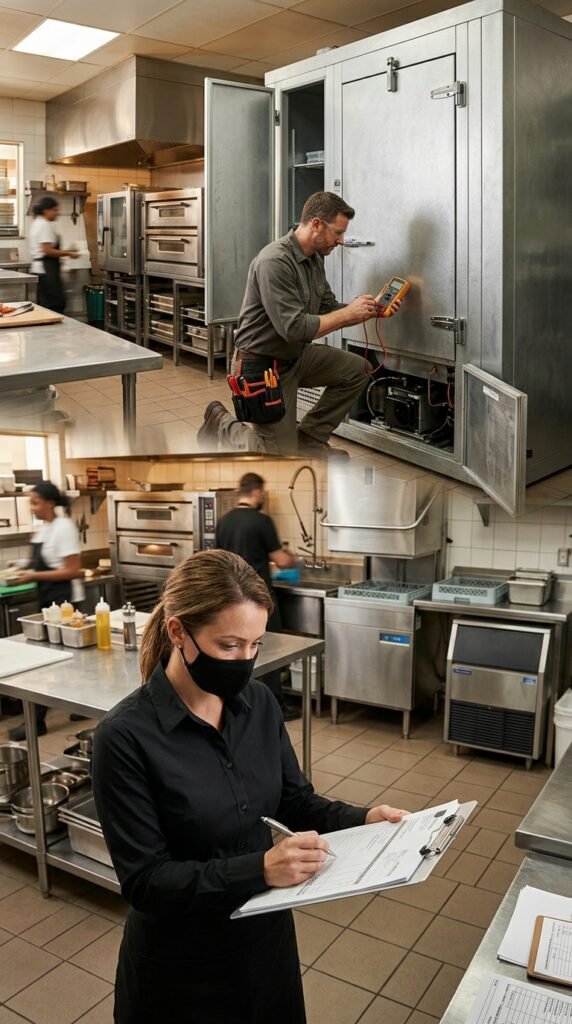
7. Equipment Repairs and Maintenance
Restaurant equipment works hard every day.
Ovens, refrigerators, freezers, dishwashers, fryers, exhaust systems, ice machines and HVAC systems can all require maintenance.
A restaurant that ignores preventive maintenance may eventually face expensive breakdowns.
For example, replacing a small worn component may cost relatively little. Ignoring the problem until a refrigerator fails could result in:
- Repair costs
- Emergency service charges
- Lost food
- Lost sales
- Business interruption
Keep an equipment expense log
Record:
- Equipment
- Date of service
- Problem
- Repair cost
- Replacement parts
- Service company
- Next maintenance date
This makes it easier to identify equipment that is becoming too expensive to maintain.
8. Breakage and Smallwares
Plates and glasses don’t always make it into the restaurant’s expense reports in an obvious way.
But restaurants constantly replace
- Plates
- Glasses
- Cutlery
- Serving dishes
- Pans
- Knives
- Cutting boards
- Storage containers
- Kitchen utensils
- Small equipment
A few broken glasses every week may seem insignificant.But when you add everything together, replacement costs can become substantial.
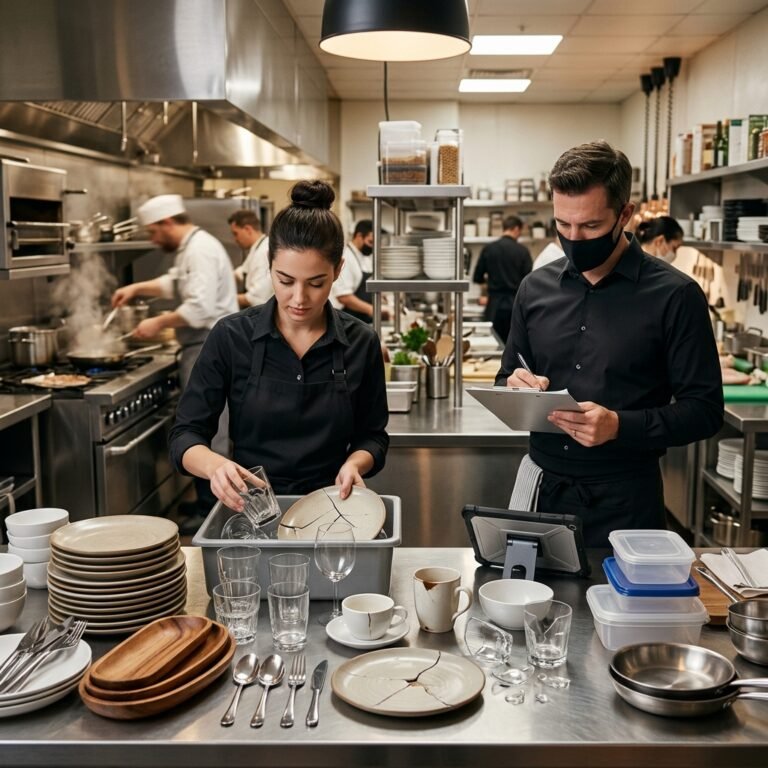
Track breakage
You don’t necessarily need a complicated system.
A simple monthly record of smallwares purchased and replaced can show whether your costs are increasing.
If breakage suddenly increases, management can investigate whether there is a storage, handling or training issue.
9. Cleaning and Sanitation Supplies
Cleaning products are essential to restaurant operations, but they are often treated as miscellaneous expenses.
Restaurants regularly purchase:
- Dishwashing chemicals
- Cleaning Chemicals
- Sanitizer
- Garbage bags
- Paper towels
- Disposable gloves
- Sponges
- Mop heads
- Cleaning cloths
- Toilet supplies
Individually, these purchases may look small.
Together, they can represent a meaningful monthly operating cost.
Create a monthly cleaning-supply budget
Track purchases by category and compare them month over month.
If spending suddenly increases, ask:
- Are products being overused?
- Are employees following dilution instructions?
- Are supplies being wasted?
- Has the restaurant become busier?
- Has the supplier increased prices?
Tracking makes the reason easier to identify.

10. Bank Charges, Software, Licences and Administrative Costs
Some of the easiest expenses to forget are the ones that happen automatically.
These can include:
- Bank charges
- POS software
- Accounting software
- Online ordering subscriptions
- Reservation software
- Music licensing
- Business licences
- Permit renewals
- Accounting fees
- Professional services
- Website hosting
- Domain renewal
- Internet and communication services
A restaurant may have several recurring subscriptions that seemed inexpensive when they were originally purchased.
Over time, however, those monthly charges add up.
Review recurring expenses regularly
Once every few months, review your business bank and credit-card statements.
Ask:
“Are we still using this service, and is it still providing enough value?”
Canceling unnecessary subscriptions can immediately improve your bottom line.

Final Thoughts
Running a profitable restaurant requires more than keeping the dining room busy.
The most successful operators understand both sides of the equation:
Revenue – Total costs = actual profit.
Food waste, complimentary items, payment fees, delivery commissions, discounts, labour inefficiencies, repairs, breakage, cleaning supplies and administrative expenses may seem like small items individually.
But when they are not tracked, they can quietly reduce your restaurant’s profit month after month.
Start tracking them.
You may discover that your restaurant doesn’t have a sales problem at all.
It may have a cost-control problem.