
How to Train Your F&B Staff for Better Upselling (Without Being Pushy)
In today’s competitive hospitality industry, increasing revenue isn’t just about getting more guests—it’s about maximizing every guest interaction. One of the most effective ways to do this is through smart upselling by your F&B staff.
But here’s the challenge:
Most staff either don’t upsell at all or come across as too pushy, which can harm the guest experience.
In this guide, we’ll show you how to train your team to upsell naturally, confidently, and effectively.
What is Upselling in F&B?
Upselling is smart way of encourasing guest to :
- Upgrade their order (e.g., regular drink → premium drink)
- Add more items (e.g., sides, desserts)
- Choose higher-margin options
Upselling is done to:
- Improves guest experience
- Increases average bill value
- Boosts overall revenue
Why Most Upselling Training Fails
Before training your staff, understand common mistakes:
- ❌ Staff feel upselling is “selling” → they hesitate
- ❌ No proper product knowledge
- ❌ No clear scripts or guidance
- ❌ Fear of annoying guests
👉 Solution: Train them to see upselling as helping guests enhance their experience, not forcing a sale.
Step-by-Step Guide to Training Staff for Upselling
1. Build Strong Product Knowledge
Service team must know:
- Ingredients
- Taste profiles
- Pairings
- Premium options
Example:
Instead of saying “Do you want dessert?”
They should say:“Our chocolate lava cake is freshly baked and pairs really well with vanilla ice cream.”
- 2. Teach suggetive selling(not pushy seling)
Train staff to:
- Recommend, not force
- Use natural language
- Observe guest preferences
Good Upselling Line:
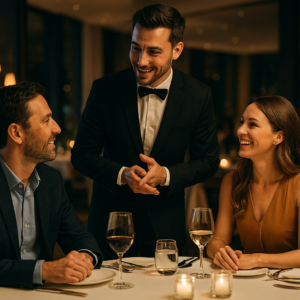
“Would you like to try our chef’s special with that? It’s one of our most popular dishes.”
3. Use the “If-Than” technique
This is simple and powerful:
- If guest orders X → suggest Y
💡 Example:
- If burger → suggest fries + drink combo
- If alcohol → suggest premium brand
This makes upselling structured and easy to follow.
- 4. Focus on timing
Upselling should happen at the right moment:
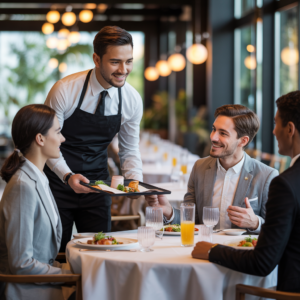
- While taking order → suggest add-ons
- After main course → suggest dessert
- While serving → suggest upgrades
Avoid:
- Interrupting conversations
- Repeating offers multiple times
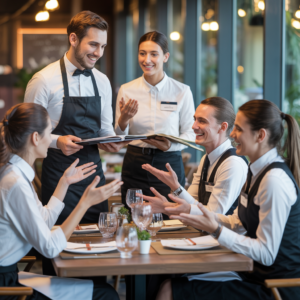
5. Train through role play
Don’t just explain—practice.
- Create real-life scenarios
- Let staff try upselling dialogues
- Give feedback
This builds confidence, which is key.
6.Introduce incentibve
Motivate your team:
- Small bonuses for upselling
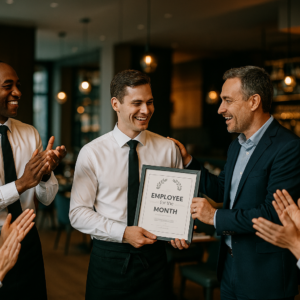
- “Upseller of the Week” recognition
- Team-based targets
When staff benefit, they actively participate.
7.Keep Guest centric approch:
Upselling should always feel like: “We are enhancing your experience”
Not: “We are trying to increase your bill”
Train staff to read:
1. Guest mood
2. Budget sensitivity
3. Occasion (family, business, celebration)
Examples of Natural Upselling
Instead of this ❌
“Do you want anything else?”
Use this ✅
1.“Would you like to add a refreshing beverage with that?”
2. “Our combo meals are a great value if you’d like to try more items.”
3. “Many guests enjoy pairing this with our house special drink.”
Benefits of Effective Upselling
Higher revenue per table
Better guest satisfaction
Improved staff confidence
Increased repeat customers
Conclusion:
Upselling is not about selling more—it’s about serving better.
When your F&B staff understands this, upselling becomes:
- Natural
- Comfortable
- Highly effective
Start with small training sessions, practice regularly, and build a culture where upselling is part of great hospitality—not pressure.
Stay connected with us for more hospitality insights, restaurant management tips, and F&B training content — follow our updates on YouTube , Facebook and Instagram